Cline 3.55.0: Arcee Trinity and Kimi K2.5 now in Cline
Cline 3.55 adds two open models worth paying attention to. Arcee Trinity Large is free, US-built, and licensed under Apache 2.0. Kimi K2.5 is an open-source model that outperforms Opus 4.5 on certain benchmarks.


Cline 3.55 adds two open models worth paying attention to. Arcee Trinity Large is free, US-built, and licensed under Apache 2.0. Kimi K2.5 is an open-source model that outperforms Opus 4.5 on certain benchmarks. Both represent a shift in what's possible without reaching for proprietary APIs.
Arcee Trinity Large is free and open-weight
Arcee Trinity Large is now available in Cline's free tier. It's a 400-billion parameter mixture-of-experts model trained in the released under the Apache 2.0 license.
Why does the US origin matter? For developers working at enterprises with compliance requirements, using models built and trained outside the US can trigger legal and security reviews. With Meta pulling back on open model releases and most frontier models coming from Anthropic and OpenAI (both closed), there's been a gap for US-based teams that want open-weight options. Arcee is explicitly filling that gap.
The model runs with 13 billion active parameters at inference time, which means you get the capabilities of a much larger model without the full compute cost. Arcee trained Trinity on Nvidia's Blackwell B300 machines, making it the first publicly documented training run at this scale on that hardware. Early benchmarks show MMLU Pro at 82 and GPQA Diamonds at 75; solid numbers for a model you can run for free.
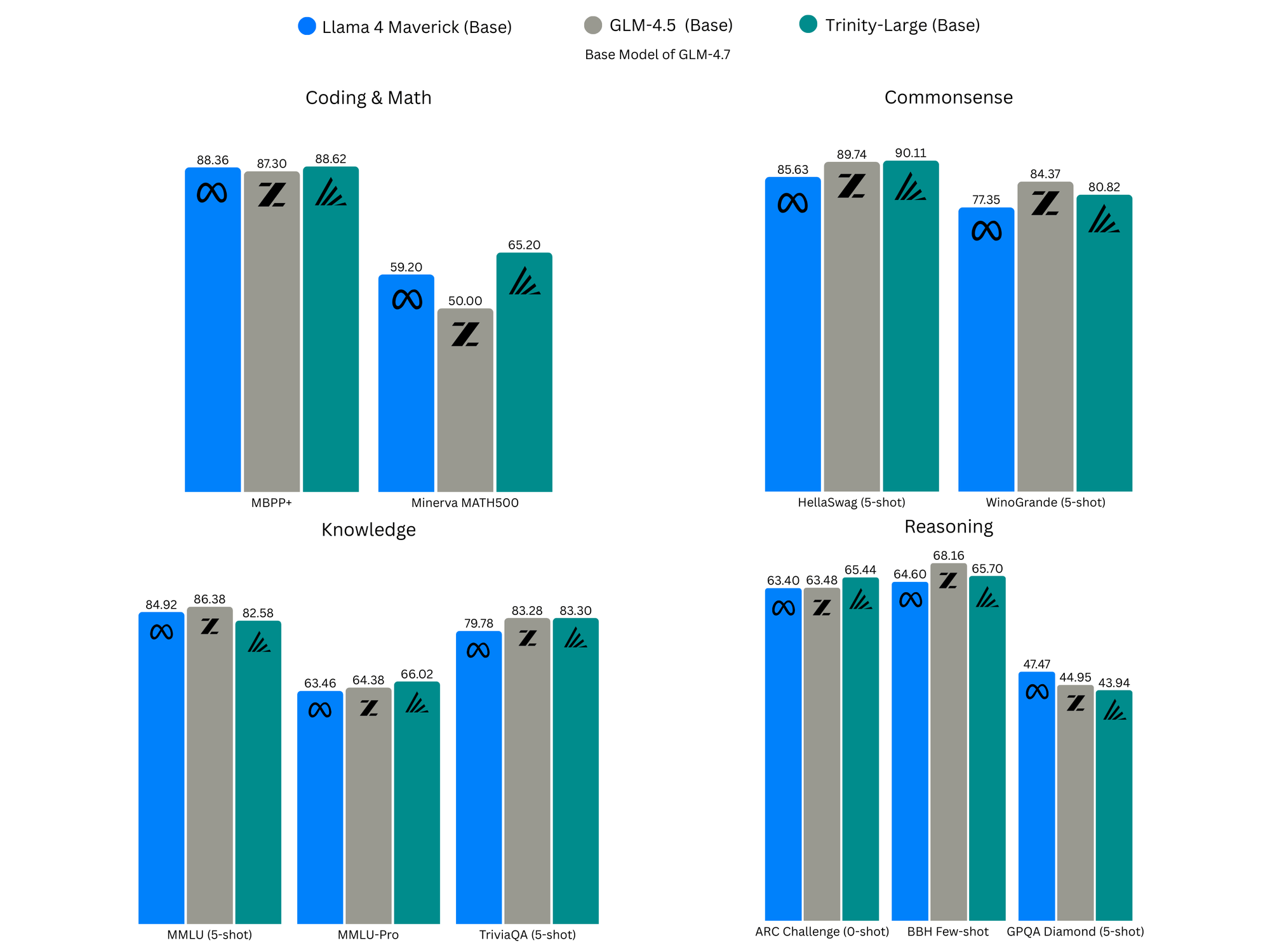
In Cline, Trinity works well for general coding tasks, refactoring, and the kind of iterative development where you want to move fast without worrying about API costs. It supports 128K context in the provider, so you can feed it substantial codebases without truncation.
To try it: Open Cline settings, select the Cline provider, and choose Arcee Trinity Large Preview from the model list.
Kimi K2.5 competes with Opus 4.5 and GPT-5.2
Moonshot AI released Kimi K2.5 this week and we added support same-day. This is a 1-trillion parameter MoE model with 256K context and full multimodal support. It's open source.
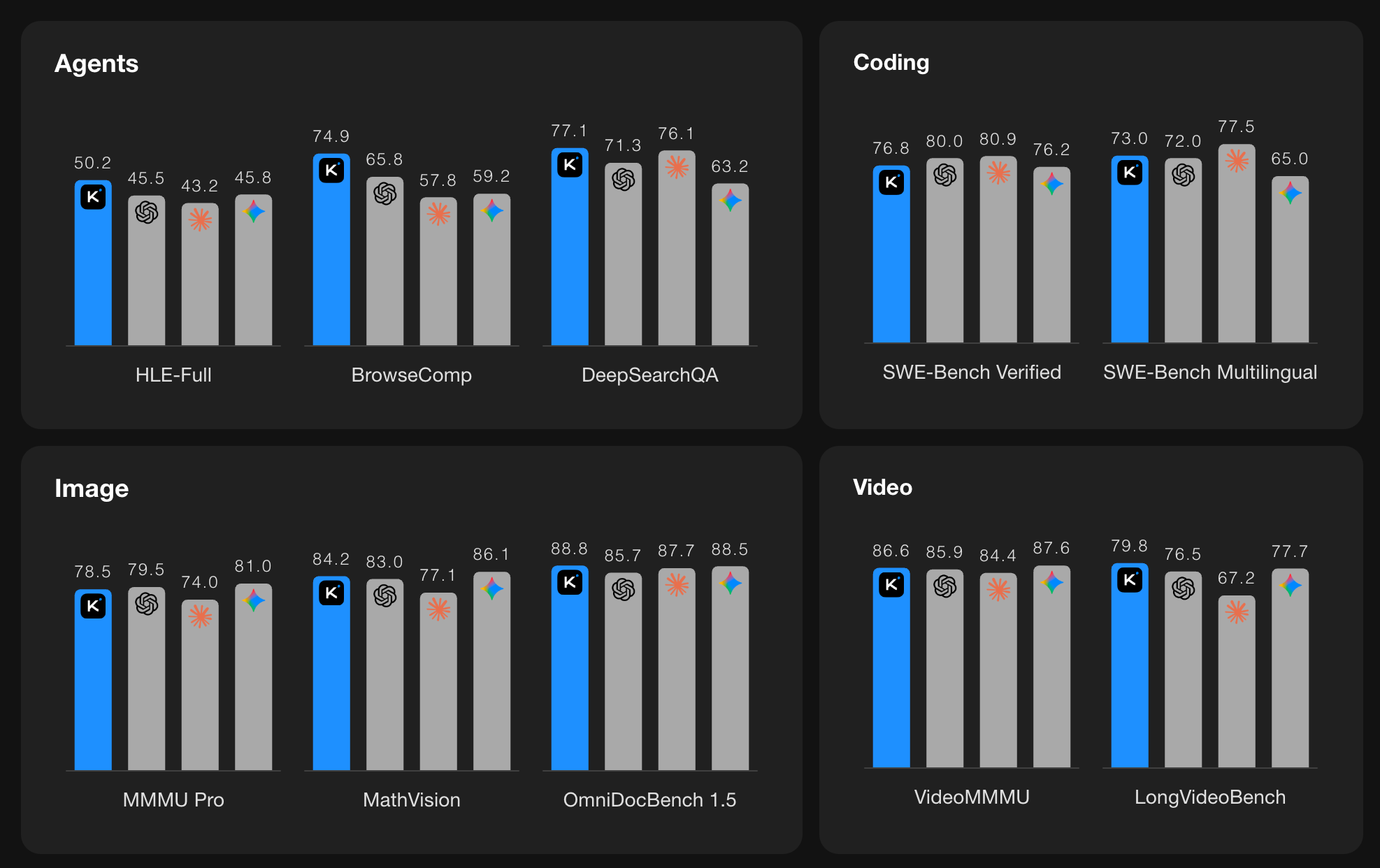
The benchmark numbers tell an interesting story. On Humanity's Last Exam, K2.5 scores 50.2% with tools, higher than both GPT-5.2 and Opus 4.5. On SWE-bench Verified, it hits 76.8%, which is close to GPT-5.2's 80% and Opus 4.5's 80.9%. For an open-source model, that's notable parity.
Where K2.5 really shines is visual coding and frontend work. You can drop a screenshot into Cline and ask it to recreate the UI; it handles layout, interactions, and animations rather than just generating static HTML. It can also visually inspect its own rendered output and iterate on code without you pointing out the errors. If you're building interfaces and want a model that understands what the result should look like, K2.5 is worth testing.
The model also supports agent swarm orchestration; it can coordinate up to 100 sub-agents and execute parallel workflows with up to 1,500 tool calls. For complex multi-step tasks, this architecture lets K2.5 break problems into pieces and work on them concurrently.
To try it:
- Open Cline settings,
- Select Cline as the provider,
- Choose Moonshot/Kimi-K2.5.
Also in this release
ChatGPT subscription support that landed in a recent release. If you have a ChatGPT Plus or Pro subscription, you can now use GPT-5 models directly in Cline through OAuth. No API key required, no per-token costs. It's a good option if you're already paying for ChatGPT and want to use those models in your coding workflow.
Finally, the free promotions for Grok Code Fast 1 and Devstral have ended. Both models are moving to paid tiers. If you were using them, Arcee Trinity Large is now available as a free alternative.
Try the new models
Cline 3.55 is available now in the VS Code, Cursor, and Windsurf marketplaces.
Open models are getting good enough that the choice between open and closed is no longer just about capability. It's about licensing, compliance, cost, and workflow fit. With Trinity and K2.5, you have real options.